Checking your roof before the weather changes can help you identify small defects early, protect the interior of your home and reduce the risk of an urgent repair later in the year.
Here are seven warning signs that your London property may need professional roof repairs.
1. Missing, Slipped or Cracked Roof Tiles
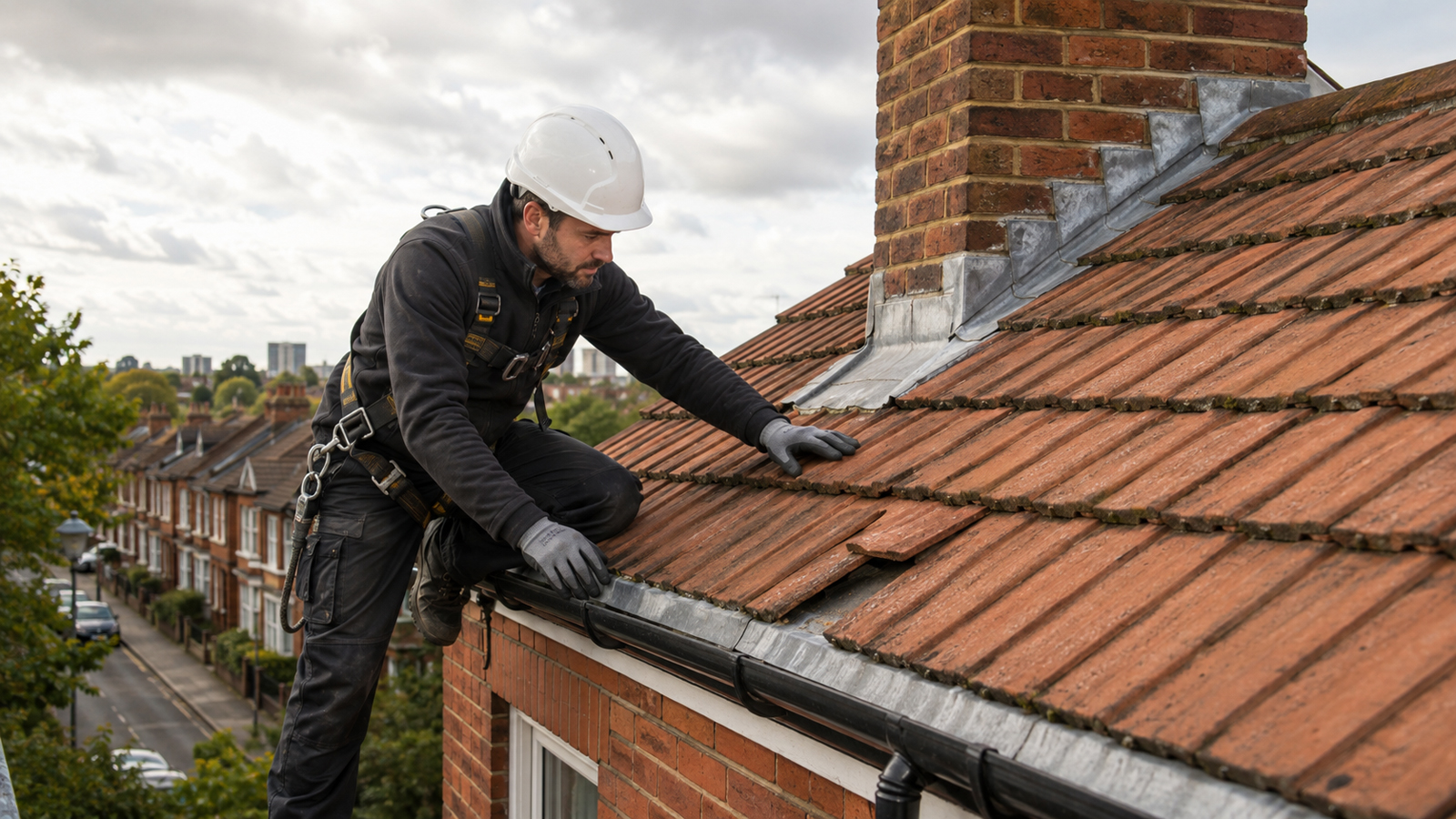
Missing and damaged tiles are among the most visible signs of a roofing problem. Even a small gap can leave the layer beneath the tiles exposed to rain and wind.
You may notice:
- Tiles that have moved out of position
- Cracked or broken tiles
- Pieces of tile in the garden or gutter
- An uneven line across part of the roof
Do not climb onto the roof to investigate. A visual check from ground level may reveal obvious damage, but a professional roofer can inspect less visible areas safely.
2. Damp Patches Inside the Property
Water entering through a damaged roof does not always drip directly into a room. It may travel along timber, insulation or pipework before becoming visible.
Common internal warning signs include:
- Brown or yellow stains on ceilings
- Damp patches near external walls
- Peeling paint or wallpaper
- Bubbling plaster
- A persistent musty smell
These symptoms should not be ignored, even if they appear only after prolonged rain. The visible patch may be some distance from the original point of entry.
3. Damaged Flashing Around Chimneys and Roof Joints
Flashing is used to seal vulnerable areas around chimneys, skylights, vents and roof junctions. If it becomes loose, cracked or corroded, rainwater may penetrate the roof.
Older flashing can gradually deteriorate, while strong winds and building movement may cause sections to lift or separate.
Repairing damaged flashing early is usually much more straightforward than dealing with water-damaged plaster, insulation or roof timbers.
4. Sagging or Uneven Areas
A roofline should normally appear straight and consistent. A visible dip, bulge or sagging section could indicate a problem with the supporting structure, roof covering or accumulated moisture.
Sagging should always be assessed promptly. Avoid entering a visibly affected roof space or attempting to inspect the area yourself until a qualified professional has confirmed that it is safe.
5. Leaking Gutters and Damaged Fascias
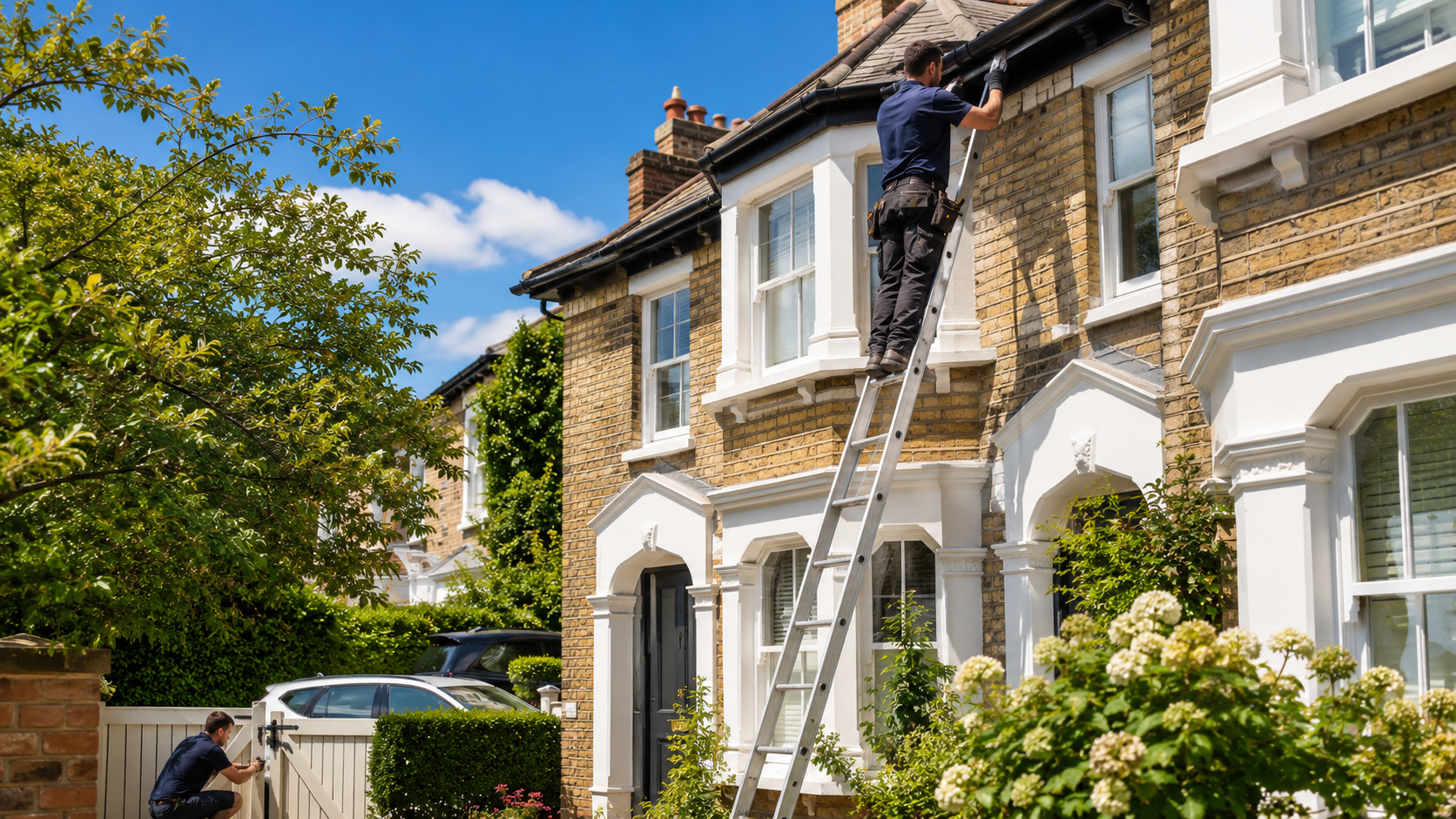
Your gutters, downpipes and fascias form an important part of the roofing system. They carry rainwater away from the roof and help protect the walls and foundations of the property.
Look for:
- Water spilling over the edge of a gutter
- Dripping joints
- Gutters pulling away from the fascia
- Cracked or blocked downpipes
- Rotten or peeling timber fascias
- Damp marks on the exterior walls
A gutter that overflows during heavy rain may simply be blocked, but it could also have an incorrect fall, damaged joints or insufficient capacity.
6. Daylight or Damp Inside the Loft
If your property has an accessible loft, inspect it during daylight without walking on unsupported areas.
Visible daylight through the roof covering may indicate a gap or missing component. Other signs include damp insulation, dark patches on timber, water marks and condensation around nails or fixings.
Condensation does not always mean the roof is leaking. Poor ventilation can produce similar symptoms, so the cause should be properly identified before repairs begin.
7. Roofing Problems That Keep Returning
Repeated leaks in the same area can mean that previous repairs have treated the visible symptom without resolving the underlying problem.
Recurring issues may be caused by:
- Deteriorated roofing materials
- Incorrectly installed flashing
- Defective roof junctions
- Problems with the underlying structure
- Several worn areas across an ageing roof
In these cases, a detailed roof inspection can determine whether another local repair is appropriate or whether a more comprehensive solution would provide better long-term value.
Why Arrange a Roof Inspection Before Autumn?
Late summer is a practical time to assess the condition of your roof. Problems can be identified before prolonged rain, colder temperatures and stronger winds make them more disruptive.
An inspection can also give you time to plan the work rather than waiting for a leak to become an emergency. Depending on the condition of the roof, the solution may involve replacing a few tiles, repairing flashing, maintaining the guttering or addressing a larger damaged area.
Early action can also help protect ceilings, walls, insulation, electrical fittings and structural timber from avoidable water damage.
Does the Roof Need Repairing or Replacing?
Not every leak means that a complete roof replacement is required.
A local repair may be suitable when the damage is limited to a small number of tiles, a section of flashing or an isolated gutter joint. Replacement may need to be considered when damage is widespread, the structure is affected or repeated repairs are no longer providing a reliable result.
The right option depends on the roof type, age, materials and overall condition. A professional inspection should identify the source of the problem before any recommendation is made.
Professional Roofing Services in London
Build Right provides roofing inspections, repairs and replacement services for properties across London. Our experienced team works with flat and pitched roofs and can also repair or replace guttering and fascias.
With more than 15 years of experience in London property maintenance and improvement, we focus on safe, practical and durable solutions.
If you have noticed a leak, damaged tiles or another warning sign, arrange an inspection before autumn weather makes the problem worse.
Book your free inspection and professional consultation with Build Right London today.
Frequently Asked Questions
How can I tell whether my roof is leaking?
Water stains, damp plaster, peeling paint, wet insulation and a musty smell can all indicate a leak. However, the entry point may not be directly above the visible damage.
Can a roof be repaired during summer?
Yes. Drier conditions can make summer a convenient time for many inspections and repairs, although suitable timing will depend on the weather and the type of work required.
Does one missing tile need urgent attention?
A missing tile can expose the layers beneath it to rain and wind. It is sensible to have the area inspected before water enters the property or surrounding tiles become loose.
Do you provide emergency roof repairs in London?
Yes. Build Right provides emergency roofing repairs to help protect properties from further damage when urgent problems occur.